Bertrand Russell proposed a system of representative realism based on the notion of 'sense data'. 'Sense data' are the products of our perception of the world: our senses produce 'sense data' as a response to our encounters with the physical world.
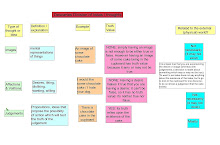
Sense data are mind-dependent representations of the physical world: they only exist in our minds and therefore are entirely subjective and relative to the particular circumstance of our perception.
- sense data vary according to our location relative to the objects we perceive
- they vary according to the functioning of our senses
- they vary according to our mood and mental state
- they vary according to their context amongst the other sense data that we get with them (staring at a tomato on a white plate in a small white room with no other distractions will produce different 'sense data' to an encounter with a speeding tomato as it whizzes past our head having been thrown at us by some tomato hurling hooligans)
So we can see that sense data are all about 'perceptual variability' or 'perceptual relativity'. Therefore Russell and other indirect or representative realists have no problem explaining illusions, hallucinations, time lag arguments etc. in the way that that direct or naive realists do: for Russell these are just occasions when the sense data fail to match up with the physical world.
Causal Dependency
Russell does not attempt any 'scientific' account of the way in which the representations in our minds are connected to the objects in the world that they represent. That there is that some degree of causal dependency between the mental representation and the physical object is, he suggests the most likely and most reasonable conclusion to draw, but the nature or accuracy of this connection cannot be established and has the status of 'working hypothesis'.











.jpg)